Posts by Rabbi Mara Young

Monday, January 21, 2013

40 Years Later (MLK Shabbat)

Picture: an individual comes before the highest leader in the most powerful nation in the world.  The individual is hesitant but knows what they must do.  The law is wrong; it must be changed.  There have been many appeals, many of which were met favorably only to be overturned.  Now standing again before the supreme power, everything is on the line.  With one favorable decree, this individual and all those like them, could live according to their own laws and their own sense of dignity.  The individual has worked hard to get here, and after repeated struggles, he demands one more time: “let my people go.”

This week’s Torah portion recounts the last of the ten plagues: the ten wonders God displays in order to change the official status of the Israelites. Moses acts like the legal counsel, approaching the bench of a hostile government numerous times, advocating for a righteous decree.  After years of being whipped to build bricks and living in poverty, it is time for the Israelites to repossess control of their bodies and their lives.

Yet, in telling the story, we tend to rush past those moments when Moses comes before Pharaoh and demands safe passage for the Israelites.  We take it for granted that at least ten times Moses had to insist his way into Pharaoh’s palace chamber to stand there surrounded by armed guards and disapproving eyes…all to advocate on behalf of his people.  After how many refusals would you have turned back?  After how many refusals would you just have accepted the status quo?

Moses is the archetype of a process that still goes on today: protesting to the highest authorities to speak to our highest morals. He teaches that we must keep stepping forward, even when we encounter setbacks. This is often what we encounter when we seek change through the political process.

MLK experienced it in his era – appropriately being dubbed a “modern day Moses.” The world saw Moses cry “let my people go” when King stood on the steps of the Lincoln Memorial delivering his “I Have a Dream speech.” His choice of venue was an demand to the government, it connected him to the century of appeals made to the highest courts and representatives – all the way back to the Emancipation Proclamation and the 13th Amendment. He too was demanding: let my people go.  Let them go forward into a better society, girded with all the tools they need to succeed.  Let them be the agents of their own destiny.

Ultimately, MLK, like Moses, understood the power of the political process.  In a collection of sermons, King shared this thought: “Let us never succumb to the temptation of believing that legislation and judicial decrees play only a minor role in solving this problem. Morality cannot be legislated, but behavior can be regulated. Judicial decrees may not change the heart, but they can restrain the heartless.”

This sentiment is highly applicable to the Supreme Court’s landmark Roe v. Wade decision in 1973.

Now, in regards to reproductive rights, we cannot put words in King’s mouth.  I don’t know how he stood on abortion.  What we do know, though, is that he supported family planning, stating as much when he accepted an award from Planned Parenthood in 1966.

Yet regardless of where King stood, his words, “Judicial decrees may not change the heart, but they can restrain the heartless,” resonate.

We forget what the landscape was like for women prior to 1973.  Single women who became pregnant were fired from their jobs.  They were sent away, out of sight, to maternity homes for unwed mothers.  Married women who became pregnant were forced to carry their pregnancies to term even if they could not afford to feed that child, or if the mother was sick, or even if the fetus would never be able to live outside the womb because it had not developed the necessary organs.

The way women were treated was heartless.  They had no choice in their fate.  There was no trust that they could think and feel enough to make decisions for themselves.

40 years ago, Roe v. Wade changed that.

The historic decision codified what we know, what we have known for a long time: choice is the backbone of freedom.  When you’re free, it means that you determine your destiny.  You are the keeper of the keys.

This concept of choice stands at the center of Judaism.  When Moses demands the Israelites be let out of Egyptian slavery, it is ultimately so that they may trek towards Sinai and willingly, freely, choose a better life through receiving the Torah. Even today, the Reform movement thrives on the concept of choice and creating personal meaning.

Because what is slavery? The tyrannical seizure of a person’s body and life choices. Freedom is being released into a world where one can develop their own moral compass and make decisions for him/herself.

Unfortunately, maintaining this freedom is an ongoing struggle. Just as Pharaoh would offer freedom and then revoke it, in the 40 years after Roe v. Wade, individuals and groups have tried to take back a woman’s right to choose. 40 years later, women are being forced to listen to fetal heartbeats, to pay out of pocket for simple health care screenings, and, in the most blatant seizure of her body, forced to invasive transvaginal ultrasounds.

Yet we should not be discouraged.  Like Moses, like Martin Luther King, we can continue to step forward in the name of justice.  We can be on the front lines.  We can be diligent in making sure that women, minorities, and all others are afforded the freedom that our ancestors eventually won.  We may feel like we’re standing before the Red Sea and that the challenge is insurmountable, but if we dive in, the seas of change might just part.

Saturday, December 29, 2012

Seeking Peace

In honor of the tradition of “Chinese food and a movie,” folks on Twitter decided to have some fun.  Using the hashtag #IfTheMovieWasJewish, individuals started getting creative with movie titles.  For example, if the movie was Jewish, the title of the movie might have been Willy Wonka and the Matzah Factory.  Other good ones were, Eat, Pray, Love, Call Your Mother, It’s a Tolerable Life, Silence of the Brisket, Little Shop of Horas, and Indiana Jones and the Mother in Law of Doom.

One suggestion that seemed particularly relevant this week was Twelve Kvetchy Men.  Not because we’ve probably been spending a lot of time with family (and our own, lovable kvetchy men) but because this week’s Torah portion rounds out the story of exactly 12 kvetchy men: Joseph and his 11 brothers. Kvetchy is an understatement, though.  Over the course of their story, we have learned that these 12 brothers can be rash, jealous, deceptive and unforgiving.  They take up many pages of Genesis in a long saga of vicious behavior…culminating in them plotting to kill their brother Joseph.  Only after this terrible episode and then years of maturation, the brothers are finally able to reconcile.

They live together peacefully, we think, in Egypt for about 17 years until their father Jacob grows ill and lies on his deathbed.  The brothers gather around to hear Jacob’s final speech. It’s quite a moment. Imagine them huddled close.  Think of how far they have come from flinging Joseph deep into a pit to die to now standing side by side in brotherly solidarity.  As one group they go to bury Jacob, giving him his last honor.

But then a curious thing happens on the way back from burying Jacob.  After those 17 years of solidarity and brotherly love, Torah says, “Now Joseph's brothers saw that their father had died, and they said, "Perhaps Joseph will hate us and return to us all the evil that we did to him."  The brothers send an intermediary to remind Joseph that Jacob commanded that he forgive his brothers for what they did all those years ago.  The problem?  Torah has no record that Jacob ever said that.

Are the brothers back to their old tricks?  Was there never really a peace between them?

The rabbis take this up this problem in the midrash[1]. They ask: What did the brothers see after the funeral that frightened them so much?  The rabbis answer: As they were returning from the burial of their father, the brothers saw Joseph go to the pit into which they had hurled him, in order to bless it.  He blessed the pit with the benediction: “Blessed be the place where God performed a miracle for me,” just as any man is required to pronounce a blessing at the place where a miracle had been performed on his behalf.  [The brothers stood off at a distance, though, and did not hear the blessing.] When they beheld him at the pit, they cried out: “Now that our father is dead, Joseph will hate us and will fully requite us for all the evil which we did unto him.”

One misinterpreted action is enough for the brothers to question years of living peacefully together. 

The uncertainty leads the brothers to do two things.  First, they do not approach Joseph directly – they speak to him through an intermediary.  Second, they lie – putting words into Jacob’s mouth.  But the rabbis ask: can we really blame them? They teach: “[the brothers’] statement is introduced to teach us the importance of peace.  The Holy One, Blessed be God, wrote these words in the Torah for the sake of peace alone.”

It is almost as if the rabbis are saying “the ends justify the means.”  Sometimes moving on, or simply finding a productive way forward is much more important.

At the end of 2012, there are many complicated feelings still in the air.  In some respects it was an inspiring year. The Olympics brought the world together; the Giants won the Superbowl.  It was also a very difficult year, with many issues still unresolved.  Civil war in Syria, the looming “fiscal cliff,” rebuilding after the hurricane, and the debate around gun control gearing up as we still mourn Newtown. Not to mention all the things we have each experienced personally.

We’re going into 2013 with this complicated desire to just shake off the difficult parts of 2012 but also with the aspiration to address these most pressing needs in our personal lives and in our local and global communities.

This week, Torah speaks to this uncertainty and our conflicted feelings. It asks the best way to move forward when the pain and mistrust runs deep.  We could read the midrash to say that we should bluff our way into 2013, doing whatever necessary in the name of resolution, but I think there is more than that.

It teaches the importance of compromising. It encourages us to seek help when we cannot find the words or the courage to face the conflict in our lives. It tells us that the path to peace is not a straightforward one. That even when we think we have found resolution, there is still the natural potential for self-doubt or backsteps.

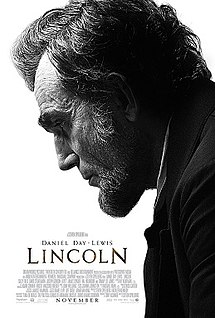
To go back to the #IfTheMovieWasJewish meme, Mark and I recently saw the movie Lincoln.  Given this week’s Torah portion, one part felt very Jewish. President Lincoln is speaking to Thaddeus Stevens, a man with very noble aims. Stevens’ feelings: your principles should drive you forward, no matter what.  Lincoln counters with a more practical but powerful metaphor. He compares noble aims to true north on a surveyor's compass. True north is essential, he tells Stevens, but you also have to navigate "the swamps and deserts and chasms along the way.” If you can't do that, he asks, "what's the good of knowing true north?"

Trudging into 2013, I believe we’re pointed north. We’re girded with the right values. Our challenge is to not be blinded or guided completely by principle, though.  We’ll only successfully move forward if we acknowledge the muck and mire that stands before us.  If we navigate the politics, the complicated feelings, the fact that our past does remain with us, then we can successfully traverse the difficult issues – hopefully reaching that most principled peace at journey’s end.  Ken yehi ratzon.


[1] Midrash Tanhuma Yelammedenu 12:17

Saturday, December 15, 2012

Kindling the Fire (Hanukkah Shabbat)

Hanukkah began last Saturday night, perfect timing for my family and friends to gather together for our yearly Hanukkah celebration in New Jersey.

Not a particularly observant man, my father made a strange but beautiful request.  He asked if we could do havdalah, the Saturday night ritual that separates Shabbat from the rest of the week.  Well, doesn't he know how to get his rabbi daughter excited!  "I'll bring the candle," I told him, "you grab some cheap wine and throw together some spices."

Saturday night arrived and we gathered.  The Batons, our dear friends, joined us per family tradition. The kids looked quizzically at the yellow braided candle.  "It looks like bread!" "It looks like pasta!"  I explained the significance of each of the symbols and of havdalah itself.  Mark and I sang the blessings, drawing us near to the end of the ritual.

Candle burning with a mighty flame, I explained, "Now we're going to get very, very quiet.  If you listen carefully enough, as I extinguish the candle in the wine, you'll be able to hear the Sabbath leave our presence."  The room drew quiet, eyes were pinned on the blazing candle.   I tipped it slowly into the wine glass...and just before it could hit the wine to create it's one of a kind sizzle...just before the light went out…"beep! beep! beep!"...the fire alarm went off.  And thus Shabbat ended with a siren, and not a sizzle.

We all erupted into laughter, which turned out to be a great way to lead into the Hanukkah blessings and lighting the Hanukkiah. Luckily it was only night one and we had little fears of what the menorah would mean for the now-sensitive fire alarm.

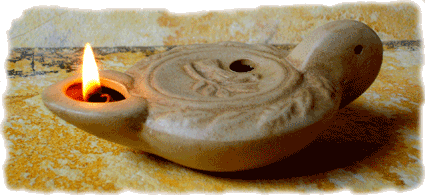
The whole funny incident made me think about how we use fire in our tradition.  Fire comes around a lot, mostly because it is full of rich symbolism.  There's the obvious light metaphors.  “This little light of mine, I'm gonna let it shine”-type sentiments.

Consider the other fires we meet, though.  The fire of the Temple sacrifices, the pillar of fire God used to lead the Israelites through the black nights in the wilderness, the fire of prophetic vision, and, of course, the fire of the burning bush...the fire that burns but does not
consume.

That fire in particular represents God manifest in the world.  It reminds us of God's enormous power - the power to warm and inspire, but also the power to burn and destroy.  Our tradition teaches that the way we harness this Divine power makes all the difference. Will you use it to provide light in the darkness or will you use it to burn things down?

That is what Hanukkah is about.  The Greeks possessed a great fire – the fire of war.  They used their fire and power to destructive ends.  They scorched the land and burned the Temple in order to torture the people.  They wielded it large and without control.

The Maccabees, though, they found fire in the smallest of places - one tiny cruse of oil.  They took the smallest amount of fire and kindled it into eight days of hope.
  They used it to bring joy back into the world - not wipe it out.

May we create that sort of fire tonight. May these hanukkiyot that illuminate our sanctuary remind us of the Divine power that resides within each of us, and our obligation to use it wisely and carefully.  May we kindle it large enough to sound the alarm against indifference, hatred, and destruction. From the smallest spark may we blaze a light of love.  Kein yhi ratzon.

Thursday, December 13, 2012

Truth and the Lost World

All sorts of people and disciplines try to define what is “real” in the world.  Science is after “the truth” as much as religion is.  But study science or study religion and you’ll see that “the truth” changes over time.  You realize that what we thought was real – what once was fact centuries ago is now considered ridiculous by modern standards.

This theme resonates throughout literature, but especially in the world of Michael Crichton.  He’s the guy that wrote Jurassic Park, Timeline, and the Andromeda Strain. His novels combine science with philosophy; writing fantasy that seems so real and so true.
 
One of my favorite passages comes from The Lost World. It concerns Jack Thorne, a materials engineer who specializes in building field equipment, vehicles, and weaponry for scientists all over the world.  In this particular section, he’s speaking to Kelly Curtis, a young woman fascinated by science.  In talking about some detailed scientific theories, he says to her:

"Are you listening to all that?" Thorne said. "I wouldn't take any of it too seriously. It’s just theories. Human beings can't help making them, but the fact is that theories are just fantasies. And they change. When America was a new country, people believed in something called phlogiston. You know what that is? No? Well, it doesn't matter, because it wasn't real anyway. They also believed that four humors controlled behavior. And they believed that the earth was only a few thousand years old. Now we believe the earth is four billion years old, and we believe in photons and electrons, and we think human behavior is controlled by things like ego and self-esteem. We think those beliefs are more scientific and better."

"Aren't they?" [Kelly asks.]

Thorne shrugged. "They're still just fantasies. They're not real. Have you ever seen a self-esteem? Can you bring me one on a plate? How about a photon? Can you bring me one of those?"

Kelly shook her head. "no, but . . ."

"And you never will, because those things don't exist. No matter how seriously people take them," Thorne said.

"A hundred years from now, people will look back at us and laugh. They'll say, 'You know what people used to believe? They believed in photons and electrons. Can you imagine anything so silly?' They'll have a good laugh, because by then there will be newer and better fantasies." Thorne shook his head. "And meanwhile, you feel the way the boat moves? That's the sea. That's real. You smell the salt in the air? You feel the sunlight on your skin? That's all real. You see all of us together? That's real. Life is wonderful. It's a gift to be alive, to see the sun and breathe the air. And there isn't really anything else.”

Crichton writes about science, he obviously believes in its value.  And so do I. Scientific discovery is exciting and essential.  It heals people; technology helps us communicate, machines make living easy or possible; science explains our natural world and our bodies, helping us to make healthy decisions.  It’s vital.

Crichton’s reminder is important though.  We can’t lose track of what’s real: our emotions, the rhythm of nature, the way we humans need one another.

These are the constants.  As Maimonides wrote: “Truth does not become more true by virtue of the fact that the entire world agrees with it, nor less so even if the whole world disagrees with it.”  It’s still truth, whether we call it that or not.

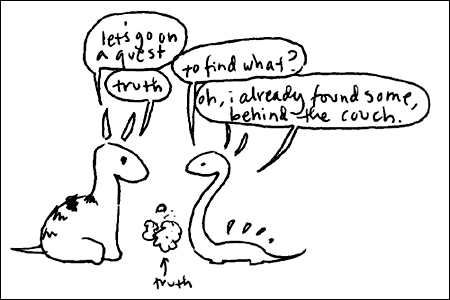
Truth.  We may perceive it, we may not, but it’s there somewhere. Sometimes we discover it, sometimes we ignore it.  A lot like God. God is that constant.  God is that reality.  God is that Truth.

May we try to happen upon that Truth, to open ourselves to our most basic joys and tranquil experiences and to discover what is most real.


Turning (after Hurricane Sandy)

In the days leading up to Superstorm Sandy, I thought my eyes were going to turn into hypnotic spirals. Like most, I was glued to the TV, watching images of the storm heading our way, hoping it would drift out into the Atlantic at the last moment. 

But as each day passed, the storm’s spiral remained well-defined, turning counterclockwise towards the shore it would eventually devastate.


Instead of turning out to sea, it turned on us.  The first day, lighting candles and eating all the ice cream out of the freezer was fun.  The second day, less so. Unfortunately, some of our temple families are still today without power, living in the homes of friends and relatives who have taken them in from the cold.  We pray that it won’t be much longer.

Here in Westchester we’ve suffered.  It’s crippling to be without your normal routine.  It’s frustrating for your house to feel like a foreign ice-box and not the home-base it is supposed to be.  We’ve got totaled cars and damage to our homes.  It has not been easy.

And then we turn on the news and we see neighborhoods in Staten Island, New Jersey and Long Island that have been blown away. That too sends a shiver through our bodies. Entire buildings, entire lives will need to be rebuilt.

Here at Woodlands, we’re responding as quickly as we can. Soon we’ll be taking up a collection for those most affected by the destruction.  We’re also putting together a taskforce to figure out when, how, and where we can get boots on the ground to help with the clearing and rebuilding.  If you are interested in helping in this, let me or Rabbi Billy know right away.

There is something we can do right now, though. And that is to give money to the relief effort.  As a temple, we’ve set a challenge for ourselves: raise as much money in 10 days as we can.  Why 10 days?  We’re taking a note from the most famous 10 days in the Jewish calendar: the Eseret Yamei Teshuva – the 10 Days of Turning – the 10 days between Rosh Hashana and Yom Kippur.  During the 10 Days, we’re supposed to turn our souls back to God. We look to rebuild ourselves into better people.

So here we are months after the High Holy Days with another opportunity for turning and rebuilding. 

Our “10 Days of Turning” initiative started last Tuesday and will go until next Friday, November 16.  You can give online or send a check to the temple office.

Certainly we can find it in ourselves to take part in this turning.  After all, the spirit of rebuilding and turning ourselves around is in the air.

Because it’s strange fate that Election Day was on Tuesday, the same day our initiative began.  That day, the message came through loud and clear from the American people: it’s time to turn towards the future. Part of that turning will be uniting our fractured political system.  We’re not just rebuilding the economy, we’re rebuilding the way we discuss issues.  As in the case of Hurricane Sandy, the enemy is not one another.  The enemy is climate change, poverty, and limitations of civil liberties. 
Our country must make a turn towards rebuilding a better society together.

President Obama put it best in his election night speech:

“Now, we will disagree, sometimes fiercely, about how to get there. As it has for more than two centuries, progress will come in fits and starts. It's not always a straight line. It's not always a smooth path. By itself, the recognition that we have common hopes and dreams won't end all the gridlock or solve all our problems or substitute for the painstaking work of building consensus and making the difficult compromises needed to move this country forward. But that common bond is where we must begin.”

It’s where we begin with rebuilding after the storm, it’s where we begin to rebuild after a highly divisive election year.  We move forward.


There’s a Calvin and Hobbes cartoon that sums it up best.

Mild-mannered Calvin is stuck doing homework on a beautiful Sunday. When no one is watching, he dashes off to become Stupendous Man, defender of freedom! Stupendous Man heads towards the earth at an acute angle, using stupendous force to begin turning the earth in the other direction. Stupendous Man turns the planet all the way around backward. Afterwards, Calvin’s mom asks if he finished his schoolwork. Calvin marches along in his Stupendous Man costume, saying it's Saturday. He doesn't need to do it until tomorrow, thanks to Stupendous Man.

Folks, we’ve got homework to do.  We have challenges ahead of us in the wake of this storm, in the wake of the election.  Our challenge is not to turn backwards, but to turn forwards.  We need to take on the challenges, take on tomorrow. May we do so speedily and productively.  Kein Yhi Ratzon.

Thursday, June 7, 2012

Satan?

There are some theological questions that are just unfair to ask a Jew:  Do you believe in heaven and hell?  “Meh…not really….but sorta...but not really.”  Do you believe in Satan? “Um…no, but yes, well, kinda.”

There’s no easy answer to these questions.  If you want to make an attempt, though, the first step is to ask someone their definition of the term at play. Do Jews believe in the fire and brimstone of an eternal damnation place called “hell”? No. Do we believe in Satan – aka the Devil – a powerful, supernatural entity that is the personification of evil and the enemy of God?  No.

But that name – Satan, or rather sa-tahn  – does come right out of our sacred scriptures.  We see it particularly in this week’s Haftarah portion from Zechariah.  So let’s try to understand it. First thing to know: except for perhaps one place in Chronicles, the word satan is not a proper name in the Bible.  Satan simply means “adversary.”  The Bible characterizes haSatan (the satan) as an accuser; a prosecutor in God’s celestial court.  HaSatan is a trickster figure, one that encourages God to test humans and their loyalty to Adonai.  In this role, haSatan is relatively powerless and cannot speak or take action without God’s permission.

The satan of Jewish tradition is not the ruler of some dark underworld, nor an adversary of God.  Rather, haSatan drums up trouble.  HaSatan sets obstacles in our way and tries to push us from the Divine path.

But how does it do this?  To say that haSatan acts directly in our lives would give this figure body and power. Instead, the rabbis explain, haSatan is the adversarial urge within us.  HaSatan is our evil inclination – that imperfect side of ourselves that strays us from doing good. It is that very human voice that harasses us and seduces us down the wrong path. 
 
There’s a Talmudic tale (Gittin 52a) that illustrates this more nuanced understanding of the satan character: “There were two people whom Satan incited so that every Friday afternoon they fought with one another.  Rabbi Meir visited there and restrained them for three Friday afternoons until he made peace between them.  R. Meir subsequently heard haSatan say: ‘Woe that Rabbi Meir has removed that man (meaning himself) from his house.’”

Two important things to highlight in this story:

1) HaSatan calls himself a man who has been expelled from the home.  This tips us off to something significant: haSatan is associated with human urges and weakness.

2) Friday afternoon.  Timing is everything.  The story says that haSatan would surface in the home just before Shabbat.  Shabbat is supposed to be the time of wholeness and peace, but with this strife emerging just before, neither peace nor wholeness was possible.

HaSatan therefore represents the conflict and disunity that pervade our human lives. HaSatan is the evil inclination that keeps us from a perfected world.  If we could only expel it from our lives, as it was expelled from that home, we could live to see a better world.  Notice, Rabbi Meir does not offer an enchantment or a prayer – he makes peace between the two people.  That act purges the home of haSatan.

If we are to “overcome haSatan” it will not be in some apocalyptic war between God and the Devil. Our tradition presents this figure of “haSatan” as a metaphor for our human struggle to make peace with each other. HaSatan represents a personal, human obstacle we must overcome. It is the constant struggle to forgive one another.  It is our struggle to be patient. It is our struggle to just sit and listen.
Just as Rabbi Meir had to return three times to the house, we too have to revisit that nest of wickedness that resides inside all of us.  It is not who we are completely, but it is a part of us. It is an inclination our tradition stresses we can control and overcome.
 
Mishebeirach Avoteinu v’Imoteinu, May the one who blessed our ancestors, the One who tested them, but loved them too, bestow on us the same kindness and the same faith that we too can push aside the adversary of self-doubt and pettiness to see a more united world and a better self.  Ken yhi ratzon.


Saturday, June 2, 2012

Miri, Nachshon, WoodSY

 this drash was delivered at a service in which our WoodSY leaders were being honored.

Rabbi Miri Gold serves Kehilat Birkat Shalom in central Israel.  You can find her on a given Shabbat leading services in the beautiful outdoor sanctuary the kehillah calls home on Kibbutz Gezer.  Miri joined the liberally-leaning kibbutz in 1977 and established a home there. Over the years, her leadership role on the kibbutz increased. Hearing the call to join the clergy, she studied at the Hebrew Union College in Jerusalem and has served as the spiritual leader of Gezer’s kehillah ever since.

As beautiful as it is, Miri Gold’s story is almost unremarkable here in the US. We’ve got plenty of female rabbis, as well as plenty of congregations and rabbis that fall for one another and serve one another.

But in Israel, this is all newsworthy. First, she’s a female rabbi.  This makes her a member of an extreme minority and a source of puzzlement to many in Israeli society. Second, she’s a Reform rabbi, making her a part of yet another minority group.  Liberal Judaism is still a difficult concept for Israelis, who, on the whole, consider someone either secular or religious.  The beautiful blend of the two that we enjoy here in America has not yet taken hold in the Holy Land.

So for years Miri Gold has championed her position and the role that liberal Judaism can play in Israeli society.  In an interview with the Religious Action Center back in 2006, she explained the cause: “For us to reach out, to get to Israelis who are searching for something, but they don’t know what it is.”

This mission is groundbreaking enough.  But Miri Gold, her community, and her Reform friends around the world, decided to kick it up a notch.  Miri would not just be an ambassador for liberal Judaism in Israel, but she would also be the one to break ground for all liberal rabbis – fighting for equal recognition by the state.

Orthodox rabbis in Israel have official “rabbi’ status.  This means they receive some funding from the state to work in their communities.  In order to get this funding, though, you must be recognized as a rabbi.  Liberal rabbis from the Reform and Conservative movements have not, historically, been recognized as such.

So for years now, Miri Gold’s name has lived the hallways of Israel’s highest court. Using Miri Gold as the “poster woman,” the Israel Religious Action Center (IRAC) has been championing her cause – demanding equal recognition for rabbis of all streams of Jewish life and thought.

And this week, it happened. In a massive, landmark decision, Israel’s attorney general ordered that Rabbi Miri Gold and other Reform and Conservative rabbis receive the same benefits that their Orthodox colleagues enjoy.

This is about more than the money.  This historic decision opens Israel up to being the truly pluralistic, welcoming state it was always meant to be.  As Rabbi Danny Allen of ARZA said, “Israel’s Declaration of Independence guaranteed religious freedom, it has to be that this freedom is for all Israeli’s, Jewish as well as Christian and Muslim. This decision brings us closer to the day where this will be the reality in Israel rather than the ideal.”

By calling Miri Gold a state-approved rabbi, the state has also approved religious diversity.

And to add to the encouragement, this comes only two weeks after Rabbi Alona Lisitsa, another female Reform rabbi, was welcomed into the religious council of the Jerusalem suburb, Mevasseret Zion.  By joining the council, she was declared a partner in the town’s spiritual life.

Something wonderful is afoot in Israel.  These two triumphs bring a wave of optimism that’s splashing through the Jewish world.  We have always declared that pluralism and cooperation were possible in the Holy Land, and now we are steps closer to that reality.  This proves that the Diaspora’s engagement with Israel and persistent advocacy on the governmental level works.

These are watershed moments. Nachson moments, if you well.  Remember Nachshon? The man the midrash says was the first to dive into the Red Sea, thereby causing it to part? He’s the man, who despite the odds being against him, understood that the risk of diving forward into the sea was better than the slavery that stood behind him.  God recognized that passion and therefore parted the sea in his honor.

This midrash connects to this week’s Torah portion, Naso.  Behold, here we find Nachshon. We learn that once the priests and the altar were ready to take offerings, guess who was the very first to bring something? Yup, Nachshon.  The instigator, the initiator, the one, who despite the risks, offers himself up first.

Rabbi Miri Gold is the Nachshon of our day.  She did not take on this cause for the fame or for the money.  She did it in the name of equality and in the name of an Israel we Jews can be proud of.  While discouraging setbacks did occur along the way, she and her team plowed forward anyway.  As a result, we can see the seas parting.  Indeed, there is a Promise Land well in the future – we can catch a little glimpse of it now.

I bring this up tonight not only so we can celebrate the changing tide (which we should) but also as a charge to our WoodSY leaders – both outgoing and incoming.  First, realize you can make change.  Second, understand that change is not always quick. We get sidetracked, we get snubbed, we go unheard. Yet, discouragement does us no good.  Despite a setback, despite fear, our Torah teaches that you must trudge forward.  There is too much at stake not to.  Gather a team, work together.  You, the WoodSY board, are like the Levites in this week’s Torah portion.  You have been appointed the leaders.  There is a whole population of WoodSYites whose cause you have been elected to champion.  Your job is to seek those special individuals out, draw them to your ranks, do what is in their best interest.  That requires a lot of listening and a lot of open-mindedness, but it is your job nonetheless.

I’m thrilled to say that the Jewish State has taught us this lesson this week.  Israel is slowly growing into the “light unto the nations” we always knew it could be. Tonight we wish a hearty yesher koach to our Reform friends in the Holy Land.  We thank Miri and her comrades for their vision and bravery and we celebrate their victory, which we pray will lead to a more just and equal Israel, one we can continue to be proud of.